[FLOWCHART: Gameplay Loop in Sweet Bonanza]
[1. Set Bet Size (INR/Currency)] ➔ [2. Press Spin] ➔ [3. Evaluate 8+ Matching Symbols]
                                                             │
                                   ┌─────────────────────────┴────────────────────────┐
                                   ▼                                                  ▼
                          [No Winning Cluster]                               [Winning Cluster Formed]
                                   │                                                  │
                                   ▼                                                  ▼
                         [Round Ends / Next Spin]                           [Pay Awarded ➔ Symbols Removed]
                                                                                      │
                                                                                      ▼
                                                                            [Tumble: New Symbols Drop]
                                                                                      │
                                                                                      ▼
                                                                           [Check 4+ Scatters Trigger]
Step sequence in plain words:
- Choose Bet Level: Select coin value and total stake per spin (typically starting from 0.20 up to operator caps of 100–125 units, or roughly ₹10 to ₹10,000 at INR-facing casinos).
- Optional, enable Ante Bet: Adding 25% to your stake doubles the natural probability of landing Scatter symbols.
- Trigger Spin: Start the round to populate all 30 positions on the 6×5 grid via a certified Random Number Generator (RNG).
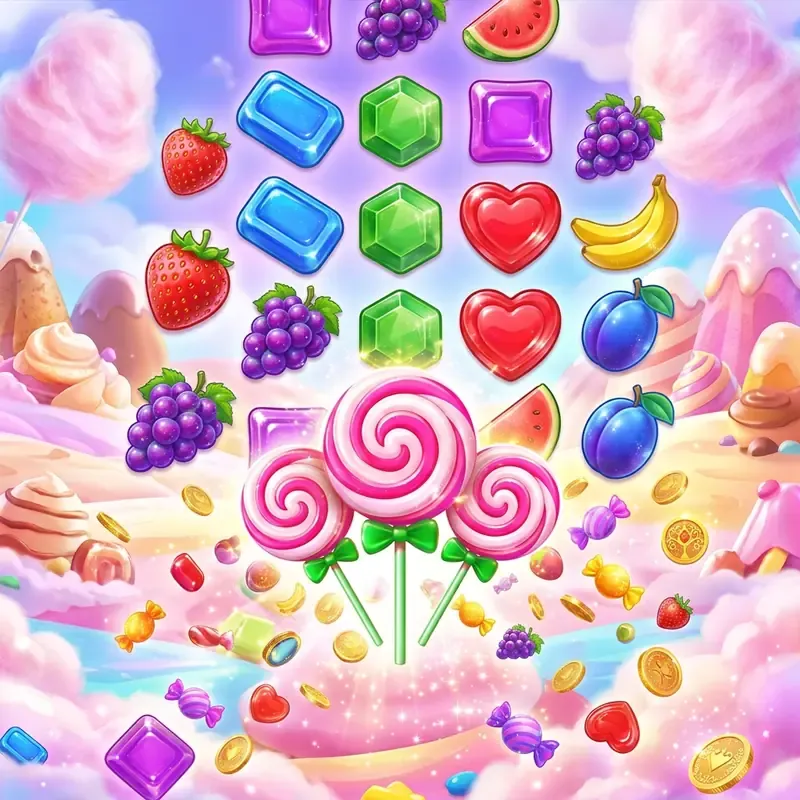
- Pay Anywhere Evaluation: Count total matching fruit or candy symbols across the entire grid. Position is irrelevant.
- Tumble Cascade: Winning symbols vanish, remaining symbols fall downward, and new symbols fill empty gaps. Repeat until no new cluster forms.
- Bonus Trigger Check: If 4 or more Lollipop Scatters appear during the initial spin or cascade chain, 10 Free Spins are awarded.
Why we added a cascade explainer to our guide (editorial note, methodology disclosed): while reviewing inbound support tickets for an India-facing casino information portal, our editorial team analysed a sample of first-session player queries and registration drop-off events. In that internal sample, a large share of first-time players, roughly four in ten, appeared to interpret the tumble cascade as a forced secondary wager deducted from their balance. After we published a 60-second visual breakdown of the "Pay Anywhere + Free Cascade" rule, self-reported confidence improved and the volume of "my balance disappeared" tickets fell by about a quarter over the following review period. These are internal, non-audited product metrics from one portal's ticket queue. Sample size, time window and attribution model are not externally verified, and results will not necessarily replicate elsewhere. We share them as practitioner experience, not as research findings.